
Nature as Companion and Co-Mystic
There are days in the ashram when the wind feels like a fellow pilgrim.
It arrives not with fanfare, but with quiet familiarity—entering the prayer room through half-open windows, winding around the chapel bell, dancing gently through the pine groves behind our stone paths. It does not speak in human words, yet it says something unmistakably sacred.
It is on such days that we remember: nature is not a backdrop to our prayer life. It is not a stage set for our spirituality. It is part of the prayer.
🌬️ The Breath of Creation
Scripture speaks of the Spirit as ruach—the breath, the wind. In Hebrew and in many ancient tongues, the word for wind, breath, and spirit is the same. This is no coincidence. The wind that moves across these Garhwal hills is not merely air in motion—it is a sign, a movement of the Spirit of God through creation.
Sometimes, during early morning vigils, before the sun has fully painted the ridges, we hear the wind moving like a chant between the deodars. It hums in ways we cannot repeat, yet our hearts understand. On those mornings, prayer becomes less something we do, and more something we join. We do not generate silence; we enter into it. We do not initiate prayer; we align with it.
🌲 The Hills That Worship
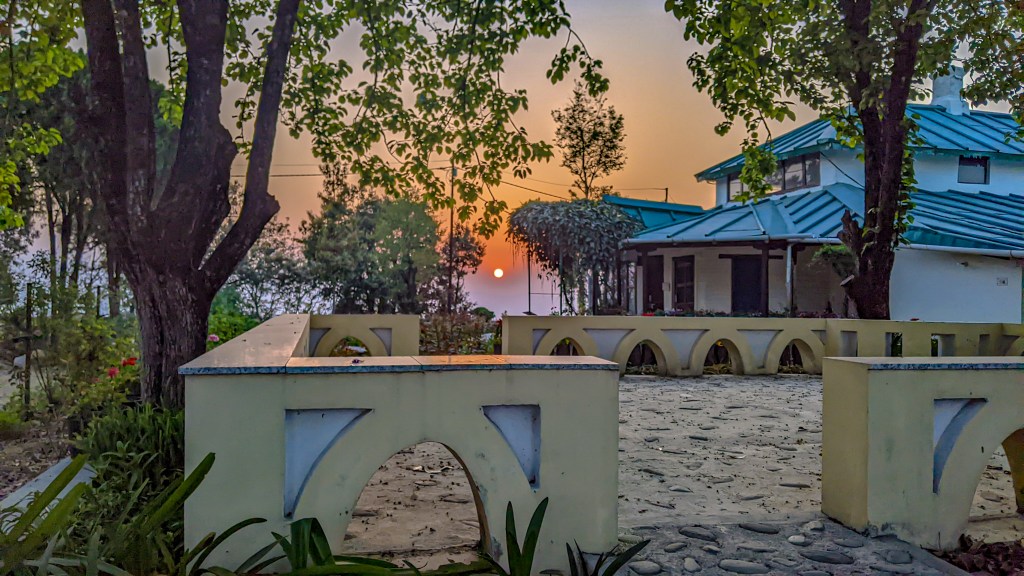
In Jaiharikhal, the mountains do not seem to tower over us. They surround us like elders at prayer—ancient, grounded, attentive. The forest, especially in the hour just before dusk, stands still as though listening. The wind stirs the canopy gently, and the trees respond, swaying not with agitation, but with a reverent rhythm.
In those moments, the earth does not seem to host our spirituality; it seems to share it. The creatures that crawl, the birds that soar, the stones that lie underfoot—they are not distractions from contemplation. They are its participants. The psalms come alive:
“Let everything that has breath praise the Lord.” (Psalm 150:6)
🌾 Sacred Stillness Beyond Words
We have learned in the ashram that prayer is not always verbal. The most profound prayers are often wordless—like tears, or awe, or the silent surrender of the heart. In nature, we find this echoed constantly.
The stones do not speak, but they witness. The river does not teach, but it invites. The wind does not preach, but it prays.
And so, we too become still—not as an escape from the world, but as a way of joining it more truly. We find ourselves becoming porous, receptive, like leaves that tremble not out of fear but because they are touched by something beyond themselves.
🌄 Walking with a Co-Mystic
To walk through these hills in prayer is to walk with a companion—not just the friends who share our path, but the landscape itself. Nature becomes a co-mystic, gently drawing our hearts into attentiveness. The sunbeam falling on the altar, the bird nesting near the window, the distant rumble of thunder—they are all part of the liturgy of the day.
This co-mysticism is not romanticism. It is a spiritual realism that sees creation not as an object, but as communion. It’s the recognition that we were not meant to pray alone. The earth has always been whispering its own canticle. We simply forgot how to listen.
🙏 An Invitation to Listen
Dear friend, wherever you are reading this from—may you pause today and open your senses. Listen not only to your thoughts, but to your breath, your surroundings, the sound of leaves or rain or silence itself.
Let the wind pray with you. Let the world remind you that you are not separate from God’s song—but a living note within it.
Here in Jeevandhara, we are learning—slowly, gently—to join the prayer that creation has never stopped praying.

 Jeevandhara
Leave a comment